

Trending Now
 PCMC approves ₹85 Lakh for DPR of Maharashtra’s First e-RTS Pilot Corridor
 Visakhapatnam partners with Moscow to build Technology-Driven Urban Transport System
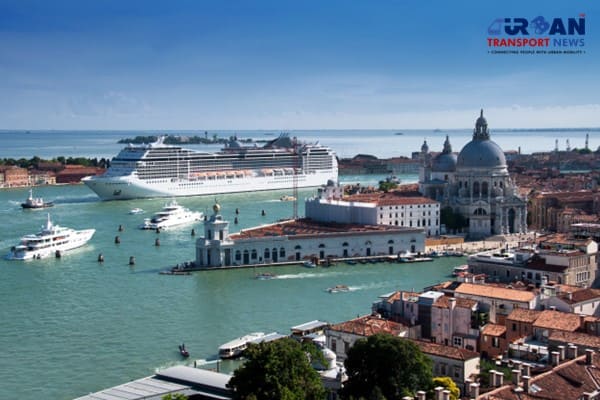 Biofuels in Shipping: A Transitional Solution or Long-Term Strategy?
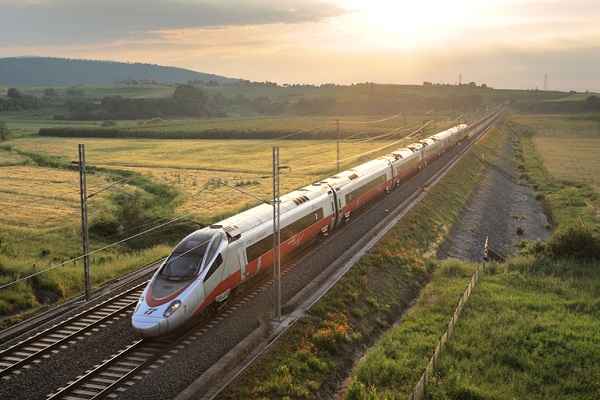 8 Reasons Why Trains Are Still One of the Best Ways to Travel
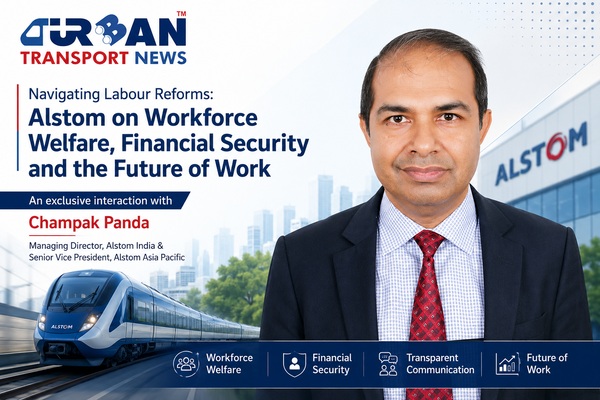 Interview with Champak Panda, MD-Rolling Stock & Components, Alstom India
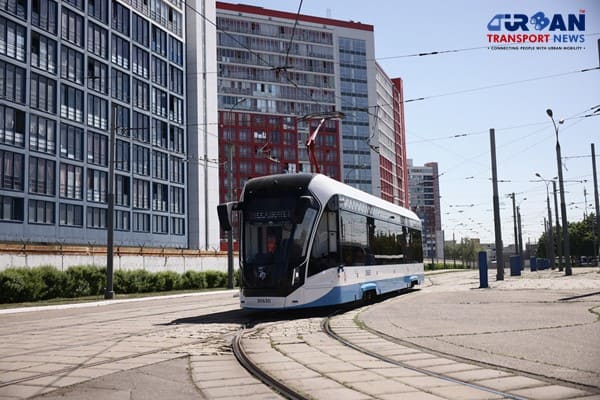 Beyond the Tailpipe: The Case for African Electric Mass Transit
 A Rejected Claim Is Not Always the End, What Car Owners Can Do Next?
 Monsoon Bike Insurance Guide: Covers That Matter before the Rains Begin
 How Train Transportation Creates Faster and Smarter Cities
 PM Modi inaugurates Noida International Airport, Boosting North India’s Multi-Modal connectivity
Philippines signs $1.87Bn civil work contract for the South Commuter Railway Project
Maria Rose
Posted on: 2022-10-06 10:50:00
Viewer: 4,892
Comments: 0
Country: Philippines
City: Manila
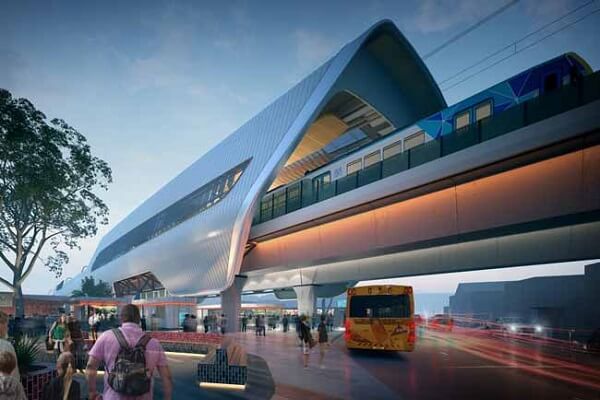
Manila, Philippines (Urban Transport News): The Department of Transportation of Philippines today signed four civil works contracts totaling $1.87 billion for the South Commuter Railway Project (SCRP). The project, which will lay nearly 55 kilometers of railway segment to connect Metro Manila with Laguna province, is being financed with $4.3 billion in loans approved by ADB in June 2022.
The South Commuter Railway Project is part of the North–South Commuter Railway (NSCR) network, which is ADB’s largest infrastructure financing in Asia and the Pacific to date. ADB is also financing construction of the Malolos–Clark Railway Project, which comprises the northern segment of the railway network.
“This project will open tremendous opportunities for economic integration across Metro Manila and neighboring provinces and create a significant positive impact on the local economy,” said ADB Deputy Director General for Southeast Asia Winfried Wicklein during the contract signing ceremony held at the Jose Rizal Monument in Calamba City.
“It will strengthen the country’s economic recovery, create as many as 35,000 construction jobs and more than 3,000 permanent jobs during the railway operation, and improve access for residents of Laguna province to employment in Metro Manila,” he said.
Philippine President Ferdinand Marcos Jr. witnessed the signing of the civil works contracts, undertaken by Transportation Secretary Jaime Bautista, and delivered the keynote speech at the event. Ambassador of the Republic of Korea to the Philippines Kim Inchul and Ambassador of Türkiye Niyazi Evren Akyol delivered messages at the ceremony, while Calamba City Mayor Roseller Rizal gave the welcome remarks.
Once completed, the South Commuter Railway will provide affordable, safe, and fast public transport, help ease road traffic congestion, and contribute to a reduction in greenhouse gas emissions in line with the Philippines’ climate change agenda. It is estimated that the project will reduce net greenhouse gas emissions by over 284,000 tons of carbon dioxide annually as commuters switch from road to rail transportation. More than 600,000 passengers are expected to use the entire NSCR system daily by 2040.
Under the project, 18 elevated and at-grade stations will be built and provide safe access for all, including the elderly, women, children, and people with disabilities. The South Commuter Railway will connect to the future Metro Manila Subway system and be designed to withstand typhoons and earthquakes. Travel time between Manila and Calamba using the railway will be reduced by over half, from 2.5 hours currently by road.
ADB is funding the civil works for the railway viaduct, stations, bridges, tunnels, and depot buildings, while the Japan International Cooperation Agency is funding the rolling stock and railway systems.
The project is one of the Philippines’ infrastructure flagship projects (IFP). Other IFPs financed by ADB include the Metro Manila Bridges Project approved in 2021, the EDSA Greenways Project in 2020, the Angat Water Transmission Improvement Project in 2016 and additional financing in 2020, the Malolos Clark Railway Project in 2019, and the Improving Growth Corridors in Mindanao Road Sector Project in 2017.
ADB is committed to achieving a prosperous, inclusive, resilient, and sustainable Asia and the Pacific, while sustaining its efforts to eradicate extreme poverty. Established in 1966, it is owned by 68 members—49 from the region.


Maria Rose
Maria Rose is an Independent Technology Journalist in London, United Kingdom. She is currently working with Urban Transport News as Special Correspondent in International News Division.