

Trending Now
 Govt of India approves Integrated Transport & Logistics Authority to drive Multimodal Planning
 PCMC approves ₹85 Lakh for DPR of Maharashtra’s First e-RTS Pilot Corridor
 Visakhapatnam partners with Moscow to build Technology-Driven Urban Transport System
 Biofuels in Shipping: A Transitional Solution or Long-Term Strategy?
 8 Reasons Why Trains Are Still One of the Best Ways to Travel
 Interview with Champak Panda, MD-Rolling Stock & Components, Alstom India
 Beyond the Tailpipe: The Case for African Electric Mass Transit
 A Rejected Claim Is Not Always the End, What Car Owners Can Do Next?
 Monsoon Bike Insurance Guide: Covers That Matter before the Rains Begin
 How Train Transportation Creates Faster and Smarter Cities
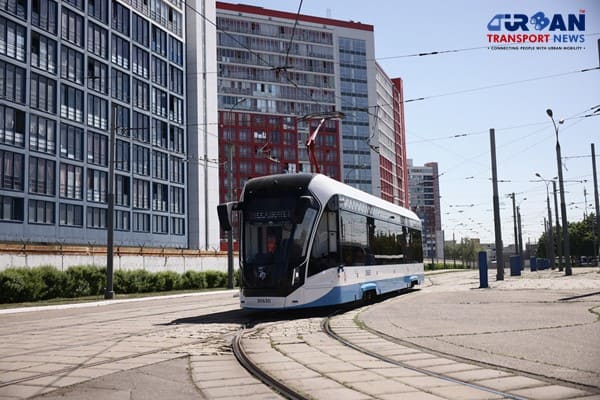
Beyond the Tailpipe: The Case for African Electric Mass Transit
UTN Online Desk
Posted on: 2026-05-21 11:20:00
Viewer: 12,352
Comments: 0
Country: South Africa
City:
Electrified public transport across Africa offers a rare double dividend: a massive reduction in urban emissions coupled with a structural surge in the quality of city life. By moving vast numbers of people with a fraction of the energy and physical footprint required by private cars, high-capacity electric transit does more than decarbonize—it democratizes the city. Investing in these systems combines environmental efficiency with a pragmatic overhaul of social and economic equity, turning the daily commute from a productivity drain into a primary engine for inclusive growth.
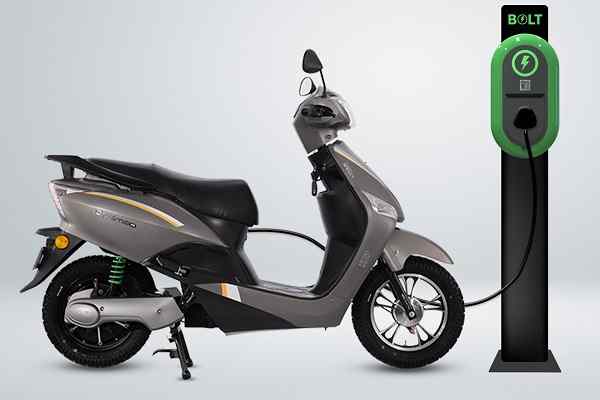
A recent analysis by MIT Technology Review offers a bullish outlook for African electromobility, forecasting that by 2040, the total cost of owning an electric vehicle will undercut that of the internal combustion engine. Grounded in falling battery prices and the steady scaling of regional manufacturing, this shift is turning the continent into a high-stakes laboratory for "low-cost" electric transport. A surge in electric motorcycles and scooters is already reshaping small-scale logistics and the "last-mile" taxi trade, signaling a shift in the microeconomy. Yet, while these two-wheelers provide nimble solutions for local delivery, they lack the structural weight to trigger the broader environmental and social gains that the continent’s development goals demand.
Beyond the Private Car: The Case for Mass Transit
True systemic gains require a pivot toward high-capacity public transit. While private EVs eliminate tailpipe emissions, they do nothing to unclog the congested arteries of Africa’s rapidly growing cities. Traffic gridlock remains a silent tax on productivity, forcing governments into a cycle of costly road expansions. In contrast, electrified mass transit functions as a high-efficiency circulatory system, moving far greater volumes of people using a fraction of the energy and urban footprint required by private cars. For African states, this efficiency is not a luxury but a mechanical requirement to meet Agenda 2063 targets—specifically the 2030 mandate to provide safe, affordable, and sustainable transport.
Yet, the transition from two-wheeled couriers to high-capacity transit faces a series of structural potholes. As African cities grow at a breakneck pace—with many set to surpass 10 million residents by 2035—physical infrastructure remains skeletal. During the 2023 World Sustainable Transport Day, the United Nations Economic Commission for Africa (ECA) warned that rapid urbanization is outstripping the development of resilient solutions. This friction is primarily financial; a "crisis loop" of high debt and inflation has forced governments to slash spending, stalling large-scale works just as global ESG requirements have tightened. This regulatory shift has coincided with cooling investor appetite and posed a mounting challenge: can the electric revolution scale to meet the needs of burgeoning mega-cities, or will it remain confined to the informal micro-logistics sector?
The ESG Dividend: De-risking Urban Transformation
The Dakar BRT serves as a potent rebuttal to such skepticism. Before its launch, the city’s transit was a fragmented landscape of loosely regulated paratransit, where the entire population was exposed to hazardous particulate matter. This pollution accounted for nearly 7% of urban deaths, draining the economy of an estimated $687 million annually. While the project’s state-led infrastructure took two decades to materialize, its operational success hinged on a critical structural division: the state handled the civil works, while the acquisition of rolling stock and concession operations were awarded via tender to the global infrastructure developer, Meridiam.
As a Benefit Corporation, Meridiam’s intervention was determining in overhauling the original plan. Utilizing its rigorous ESG framework, the firm pivoted the project from conventional diesel to a 100% electric fleet, transforming an 18-kilometer corridor into a high-capacity backbone that now halves commute times for 300,000 daily passengers. Beyond the hardware, the project’s focus on social governance has formalized 1,000 local jobs with strict mandates for gender-inclusive hiring. "The project addresses a fundamental need for sustainable, high-quality mobility," notes Mete Saraçoğlu, Meridiam’s Africa Director. "By introducing an electric network that relies on local expertise, we are transferring skills and creating jobs while seeing remarkably high levels of public satisfaction." Now in full operation, the corridor stands as a resilient, decarbonized model, proving that private-sector ESG commitments can turn a skeletal plan into an engine for equitable growth.
The success of the Dakar model underscores the urgent need to make a structural case for e-BRT and high-capacity electric transit across the continent. While decarbonization is a vital entry point, the true pitch for African governments lies in the intersection of air quality, economic productivity, and social mobility. The Abidjan Metro Line 1 is the next major test of this thesis. Currently under construction and approximately 45% complete as of March 2026, the project is slated for an early 2029 debut. Once operational, it is expected to move over 500,000 daily passengers, offering a transformative opportunity to sidestep the congestion and emissions inherent in car-dependent growth.
According to Amadou Koné, Côte d’Ivoire’s Minister of Transport, the goal is to provide a "modern system capable of redefining urban transformation" by integrating the metro with broader BRT networks to transport a million people daily. However, the realization of these benefits hinges on the same variable that proved decisive in Senegal: the performance of private partners. For the promised dividends in vocational training and grid resilience to materialize, the consortium—including Alstom, Bouygues Travaux Publics, and Colas Rail—must deliver on its ESG commitments with the same rigor Meridiam brought to Dakar: in a climate of fiscal constraint, performance of private partners is no longer just a procurement hurdle but a requirement for ensuring that large-scale infrastructure actually functions as a reliable public utility.
This requirement is particularly critical for a continent that cannot afford the cost of inefficient, legacy solutions. Africa occupies a unique developmental window where it can sidestep the cumbersome, petroleum-heavy transit models of the 20th century in favor of clean, high-capacity electric systems from the outset. Seizing this opening allows governments to demonstrate a clear commitment to low-emission infrastructure, sending a powerful signal to international markets. By further derisking these projects through robust ESG frameworks, states can unlock the private capital necessary to transform urban mobility. The result is a systemic shift that yields dividends in public health, climate resilience, and economic stability—benefiting every stakeholder, from the daily commuter to the national treasury.

UTN Online Desk
Urban Transport News provides real-time updates for all modes (Railways, Roadways, Waterways & Airways) of the Transportation and Urban Infrastructure Industry.