

Trending Now
 PCMC approves ₹85 Lakh for DPR of Maharashtra’s First e-RTS Pilot Corridor
 Visakhapatnam partners with Moscow to build Technology-Driven Urban Transport System
 Biofuels in Shipping: A Transitional Solution or Long-Term Strategy?
 8 Reasons Why Trains Are Still One of the Best Ways to Travel
 Interview with Champak Panda, MD-Rolling Stock & Components, Alstom India
 Beyond the Tailpipe: The Case for African Electric Mass Transit
 A Rejected Claim Is Not Always the End, What Car Owners Can Do Next?
 Monsoon Bike Insurance Guide: Covers That Matter before the Rains Begin
 How Train Transportation Creates Faster and Smarter Cities
 PM Modi inaugurates Noida International Airport, Boosting North India’s Multi-Modal connectivity
MMRDA launches STAMP 2019 to facilitate access to Mumbai Metro
Anushka Khare
Posted on: 2019-08-05 15:23:28
Viewer: 2,350
Comments: 0
Country: India
City: Mumbai
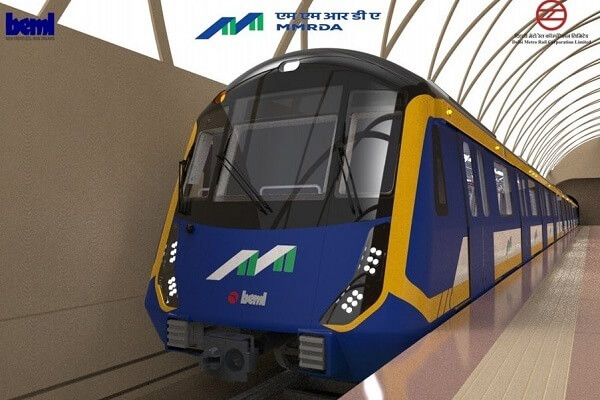
Mumbai (Urban Transport News): The Mumbai Metropolitan Region Development Authority (MMRDA) in collaboration with World Resources Institute (WRI) India Ross Center and Toyota Mobility Foundation (TMF) jointly launched the Station Access and Mobility Program (STAMP 2019) in Mumbai on Wednesday. The program (STAMP 2019) aims at enabling public-private partnership by launching a challenge to seek innovative data and technology-based solutions to improve crowd management and first- and last-mile connectivity to the Mumbai Metro.
STAMP will be facilitated by the Municipal Corporation of Greater Mumbai (MCGM), Mumbai Traffic Police (MTP), Mumbai Rail Vikas Corporation Limited (MRVC), Mumbai Metro One Pvt. Ltd. (MMOPL) and Maharashtra State Innovation Society (MSInS). MMRDA spearheads the task of building the metro network in the Mumbai Metropolitan Region (MMR). They have already successfully begun implementation, with over 300 kilometers of metro rail networks in the region in varied stages of completion. The current 11.4 km of the Mumbai Metro One Line that offers east-west connectivity in the city by linking major suburban hubs of Versova, Andheri and Ghatkopar to employment centers, has a total anticipated ridership of around 8 million passengers per day.
This ridership is expected to continue growing as the metro offers a safe and reliable commute option. This will, in turn, increase the need for control of metro passenger traffic. Electric and alternate fuel-based last-mile connectivity services, informed commuting enabled by data dissemination, and tech-enabled crowd management techniques can help improve metro commuter experience. The STAMP Challenge will seek such solutions by building efficiencies in passenger flow and passenger dispersion at stations.
#STAMP2019 at #MMRDA Had a successful dialogue on innovations in commuting & encouraging sustainable solutions in mobility. We appreciate the efforts of @WRICitiesIndia towards encouraging #startups, citizen groups & #government entities pic.twitter.com/MXFP1TsC5T
— MMRDA (@MMRDAOfficial) July 31, 2019
The STAMP initiative invites entrepreneurs, citizens’ groups, professionals, and students to submit proposals targeted at seamless multi-modal transfer. Their proposals should enhance commuter experience, last-mile connectivity options to metro/suburban rail, and/or traffic flow management systems for station access areas. Selected solutions and service providers will be able to leverage information provided by MMRDA, MCGM, MTP, MRVC, MMOPL and WRI India. The objective is to apply new technologies to better utilize data and address commuting and access challenges faced by metro users in Mumbai.
Proposals will be evaluated in a two-step process, based on criteria such as potential for impact and deployment, sustainability and replicability. The final teams will participate in an intensive five-day accelerator with stakeholders to help adapt solutions to identified problem statements. The accelerator will culminate in a public Pitch Day event, at which 2-3 winning proposals will be announced and awarded research grants and an opportunity to pilot their solutions. On the occasion, R. A. Rajeev, Metropolitan Commissioner, MMRDA said,
MMRDA is creating additional public transport system by way of metro projects which will cater to additional 8 million passenger trips per day. To ensure smooth, efficient and safe dispersal of commuters for last/first mile connectivity MMRDA is implementing multimodal integration plans together with technology innovations. In this context MMRDA is happy to associate with WRI and other concerned agencies.
An MMOPL spokesperson said,
Commuting through multiple modes of transport is an everyday challenge for Mumbaikars. Interchange between modes of transport eats into commuters' valuable time. Mumbai Metro One has set a new benchmark in providing multi-point entry and exit, efficient crowd management and seamless commuter flow at all its stations to enhance commuter experience and save on their time. We look forward to enhance convenience and comfort for last-mile connectivity for metro users as a part of STAMP initiative.
This is the fourth edition of the STAMP challenge led by WRI India and Toyota Mobility Foundation. Previously, they have worked in Bengaluru, Hyderabad and Kochi to improve access and last-mile connectivity to mass transit systems using data. This year, WRI and TMF will work towards improving access and usage of metro transit in Mumbai by sourcing innovative and sustainable entrepreneurial solutions. Toyota Mobility Foundation Director, Prasanna Ganesh remarked,
Metro transportation must enable its commuters with a safe, affordable, convenient and comfortable mobility offering. To achieve this, Mumbai Metro has agreed to tackle the significant problem of crowd management in their stations as a critical element of the commute. The Toyota Mobility Foundation is excited to work with WRI India and introduce technology and data-driven innovations that can be coupled with localized ideas to augment the Mumbaikar commuter experience. After successful pilots in Bengaluru, Hyderabad and Kochi, STAMP Mumbai will take another step to comprehensively tackle the first- and last-mile problem.
Commenting on the launch of STAMP in Mumbai, Mr. Shekar Viswanathan, Vice Chairman and Wholetime Director of Toyota Kirloskar Motor, said,
The launch of STAMP in Mumbai seeks to enhance firstand last-mile connectivity by creating sustainable transport systems that is economical and easily accessible. With the rapid surge in the usage of metro, this initiative will fuel the constant innovation we are pursuing to lend to the greater good of society. At the end of the day, the efficiency of the metro needs to be matched by equally efficient first- and last-mile services for affordable and time-saving commutes.
Mr. Madhav Pai, Director, WRI India Ross Center for Sustainable Cities, commented,
From an urban planning perspective, Mumbai has many things right; a mix of land uses, good densities and a development centered around transit. What it really needs now is to address the improvement in station environments for better commuting.
Learning’s from the pilots will be documented and used to work with MMRDA and other partners to develop strategies in planning last-mile solutions, mode integration, and passenger management for existing and upcoming metro projects in Mumbai.


Anushka Khare
Anushka Khare is a Post Graduate in Journalism from Makhanlal Chaturvedi National University of Journalism and Communication, Bhopal (MP). She covers stories and updates from India.