

Trending Now
 Govt of India approves Integrated Transport & Logistics Authority to drive Multimodal Planning
 PCMC approves ₹85 Lakh for DPR of Maharashtra’s First e-RTS Pilot Corridor
 Visakhapatnam partners with Moscow to build Technology-Driven Urban Transport System
 Biofuels in Shipping: A Transitional Solution or Long-Term Strategy?
 8 Reasons Why Trains Are Still One of the Best Ways to Travel
 Interview with Champak Panda, MD-Rolling Stock & Components, Alstom India
 Beyond the Tailpipe: The Case for African Electric Mass Transit
 A Rejected Claim Is Not Always the End, What Car Owners Can Do Next?
 Monsoon Bike Insurance Guide: Covers That Matter before the Rains Begin
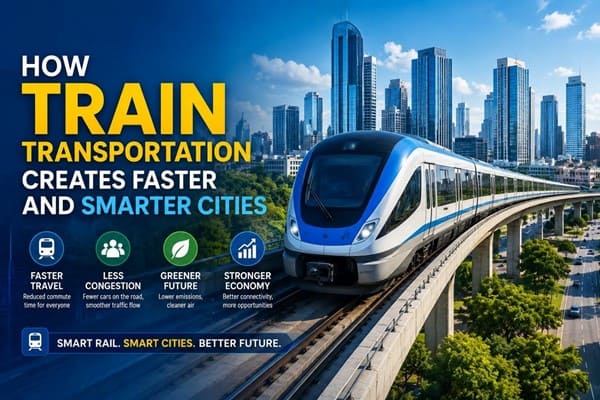 How Train Transportation Creates Faster and Smarter Cities
Ayesa bags first RRTS tender for designing of rapid rail stations
Anushka Khare
Posted on: 2019-04-17 07:25:52
Viewer: 2,312
Comments: 0
Country: India
City: New Delhi
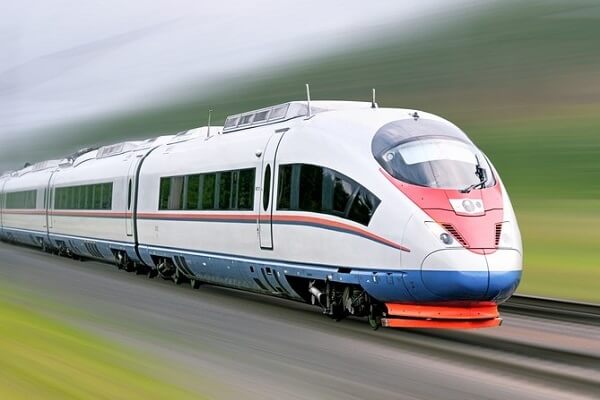
New Delhi (Urban Transport News): Global consultancy firm Ayesa has bolstered its position in the transport sphere in the Indian market, where this year it celebrates its tenth anniversary. The company has been awarded a significant tender within the Regional Rapid Transport System (RRTS), one of the most ambitious projects in the National Capital State Territory of Delhi.
The transport system will furthermore be cutting-edge in the country, as it will be the fastest in operation as there is still no high-speed rail network in place. Designed to run at a speed of 180 kilometres per hour, this forms a high or semi-high-speed rail corridor (as per its English definition), that will link the cities of Delhi, Ghaziabad and Meerut. The 82-kilometre journey will be covered in 62 minutes, almost half the current travelling time required.
Ayesa will design four of the elevated stations included in the Delhi-Ghaziabad-Meerut RRTS corridor (Sahibabad, Ghaziabad, Guldhar and Duhai). This is the first detailed engineering package awarded by the National Capital Regional Transport Corporation (NCRTC), the state-run body that promotes these projects. The contract also includes two depots in Duhai and Modipuram. This corridor is one of the three that the Government has established as a priority.
It has been allocated a budget of around 3.8 billion euros for its construction, with the system expected to be operational in 2025. The entire plan foresees the creation of eight corridors. The company has shared the information through a press statement.


Anushka Khare
Anushka Khare is a Post Graduate in Journalism from Makhanlal Chaturvedi National University of Journalism and Communication, Bhopal (MP). She covers stories and updates from India.