


Trending Now
 Interview with Champak Panda, MD-Rolling Stock & Components, Alstom India
 Beyond the Tailpipe: The Case for African Electric Mass Transit
 A Rejected Claim Is Not Always the End, What Car Owners Can Do Next?
 Monsoon Bike Insurance Guide: Covers That Matter before the Rains Begin
 How Train Transportation Creates Faster and Smarter Cities
 PM Modi inaugurates Noida International Airport, Boosting North India’s Multi-Modal connectivity
 Things You Can Do While on Long Train Rides: Stay Productive, Relaxed, and Entertained
 Rail Chamber launches 2026–27 National Membership Drive to strengthen Asia’s Railway Ecosystem
 North-South Commuter Railway (NSCR): Modern Train Network Connecting Luzon Island
- India launched Bharat Taxi Service as First Cooperative-Owned Digital Mobility Platform
The rise of Autonomous Drone Taxis: A Sustainable and Efficient Future for Urban Mobility
UTN Online Desk
Posted on: 2025-03-03 10:15:00
Viewer: 998
Comments: 0
Country: India
City: New Delhi
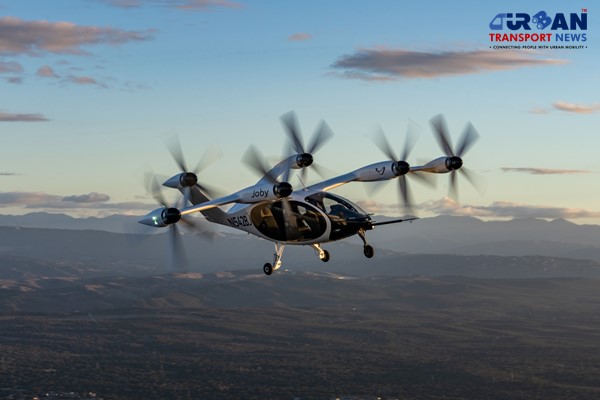
Urban congestion and rising carbon emissions have reached unprecedented levels, placing increasing pressure on cities to adopt innovative and sustainable transportation solutions. One of the most promising concepts emerging in this context is the autonomous mini-drone taxi, a revolutionary mode of transportation that integrates cutting-edge artificial intelligence (AI), renewable energy, and ultra-fast charging systems. Our research delves into how this technology can reshape the future of urban mobility, offering faster, greener, and more efficient transit options in cities worldwide.
The question is no longer about whether drone taxis will take off, but when—and how extensively they will be adopted. With advancements in AI, battery technology, and air mobility infrastructure, autonomous drone taxis are poised to become a trillion-dollar industry by 2040. This article presents insights from my research on the technologies, market potential, and investment viability of autonomous air mobility (AAM), shedding light on how this innovation will transform urban transport systems globally.
How Do Autonomous Drone Taxis Work?
In our extensive research and simulations, we have designed a conceptual framework where autonomous drone taxis operate as electric vertical takeoff and landing (eVTOL) vehicles. These drones will function within a Smart Urban Air Mobility (UAM) framework, leveraging AI-powered flight systems to navigate urban airspace autonomously. These systems allow drones to self-navigate, avoid obstacles in real-time, and coordinate with air traffic control systems, ensuring safe and efficient operations in bustling cityscapes.
The backbone of this system is the electric propulsion system that allows drones to take off and land vertically, eliminating the need for conventional runways. This feature enables drone taxis to operate in dense urban areas, where space is limited.
Key Technologies Driving Drone Taxis
Several technological advancements are pivotal in making autonomous drone taxis a reality:
-
AI-Powered Navigation: By integrating machine learning algorithms and sensor fusion, drones can autonomously navigate complex urban environments. This combination allows for real-time navigation and obstacle avoidance, ensuring passenger safety while maximizing operational efficiency.
-
Fast-Charging Helipads: To minimize turnaround times and keep drones operational, I have analyzed both wireless inductive charging and high-power wired systems. These rapid charging solutions allow drone taxis to operate seamlessly with minimal downtime, providing high-frequency services.
-
Solar-Powered Infrastructure: In line with my findings, vertiports (designated landing and charging stations for drone taxis) can be equipped with solar panels to harness renewable energy. This infrastructure significantly reduces dependency on the traditional energy grid, supporting a sustainable transport ecosystem that aligns with global decarbonization goals.
-
Lightweight Composite Design: The use of carbon fiber and 3D-printed aerostructures in drone construction reduces weight while maintaining durability. These advanced materials enhance the overall efficiency of drones, increasing their flight range and operational performance.
-
Battery & Power Management: I’ve explored the potential of solid-state batteries and fast-charging systems to ensure that drone taxis have high energy density and quick turnaround times. These innovations are crucial to achieving the high energy efficiency and operational viability required for frequent citywide flights.
Market Potential and Investment Opportunities
The market for autonomous air mobility is rapidly expanding, and research suggests a massive growth trajectory over the next two decades.
Projected Growth:
According to my analysis, the electric vertical takeoff and landing (eVTOL) market is forecasted to reach $4.6 billion by 2030, growing at a compound annual growth rate (CAGR) of 35%. Leading market research firms, including Morgan Stanley, predict that the market for air taxis will swell into a $1 trillion industry by 2040 as cities implement large-scale air mobility networks.
Companies like Joby Aviation, Archer, Volocopter, and Hyundai have already secured significant funding, solidifying the future of drone taxis as a vital component of urban transit.
Why Investors Should Pay Attention:
-
Early-Stage Opportunity: Much like the early days of the electric vehicle (EV) revolution, backing UAM companies today presents a high-return opportunity. Research indicates that investment in this sector could yield tremendous profits, with the industry growing exponentially in the next decade.
-
Multi-Billion Dollar Ecosystem: Investments in eVTOL manufacturers are only part of the story. The broader UAM ecosystem includes investments in AI software, smart infrastructure, and vertiport development. This multi-faceted approach will generate additional revenue streams, ensuring sustained growth across multiple sectors.
-
Sustainability Appeal: One of the strongest selling points for drone taxis is their alignment with net-zero carbon goals. As cities and nations strive to reduce carbon emissions, drone taxis offer an environmentally friendly transportation solution, making them an attractive investment for ESG (Environmental, Social, and Governance) funds.
Future Challenges & Scalability
While the prospects for drone taxis are promising, there are several challenges to overcome before full-scale deployment:
-
Regulatory Approvals: Aviation authorities like the FAA (Federal Aviation Administration) and EASA (European Union Aviation Safety Agency) will need to certify autonomous flight systems and set safety standards before drone taxis can operate commercially. My research indicates that these approvals will be a critical milestone in unlocking the market’s potential.
-
Public Acceptance: Widespread adoption of drone taxis will depend on addressing public safety concerns, noise pollution, and the integration of drone operations within the urban fabric. Ensuring public confidence through rigorous safety measures and clear communication will be crucial for large-scale adoption.
-
Vertiport Network Expansion: To support scalable operations, cities must build an extensive network of charging hubs and landing zones. The development of these vertiports will be a major logistical challenge and will require collaboration between governments, private companies, and urban planners.
-
Battery Innovations: Battery technology will be a key factor in determining the success of drone taxis. Innovations in solid-state batteries and fast-charging systems will be essential to ensure that drones can operate efficiently, with adequate range and high-frequency flight schedules.
Despite these hurdles, global momentum for drone taxi services is already building. Major cities like Dubai, Singapore, and Los Angeles are actively testing drone taxi services, laying the groundwork for a future where drone taxis could become as common as traditional taxis.
Final Thoughts: Are Drone Taxis the Future?
Imagine a world where your 60-minute drive turns into a 10-minute flight. My research strongly suggests that this future is not just a possibility—it’s on the horizon. With AI, clean energy, and autonomous flight technology advancing at a rapid pace, drone taxis are poised to become an integral part of smart city infrastructure.
The race to develop and deploy drone taxis is well underway, and early investors who recognize the immense potential of this market will stand to benefit from one of the most transformative technological revolutions of the 21st century. As cities continue to struggle with congestion and environmental challenges, drone taxis offer a promising, sustainable solution that could redefine urban mobility worldwide.


UTN Online Desk
Urban Transport News provides real-time updates for all modes (Railways, Roadways, Waterways & Airways) of the Transportation and Urban Infrastructure Industry.