

Trending Now
 Govt of India approves Integrated Transport & Logistics Authority to drive Multimodal Planning
 PCMC approves ₹85 Lakh for DPR of Maharashtra’s First e-RTS Pilot Corridor
 Visakhapatnam partners with Moscow to build Technology-Driven Urban Transport System
 Biofuels in Shipping: A Transitional Solution or Long-Term Strategy?
 8 Reasons Why Trains Are Still One of the Best Ways to Travel
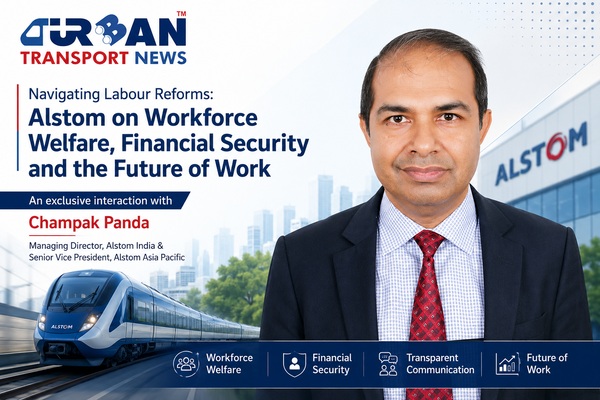 Interview with Champak Panda, MD-Rolling Stock & Components, Alstom India
 Beyond the Tailpipe: The Case for African Electric Mass Transit
 A Rejected Claim Is Not Always the End, What Car Owners Can Do Next?
 Monsoon Bike Insurance Guide: Covers That Matter before the Rains Begin
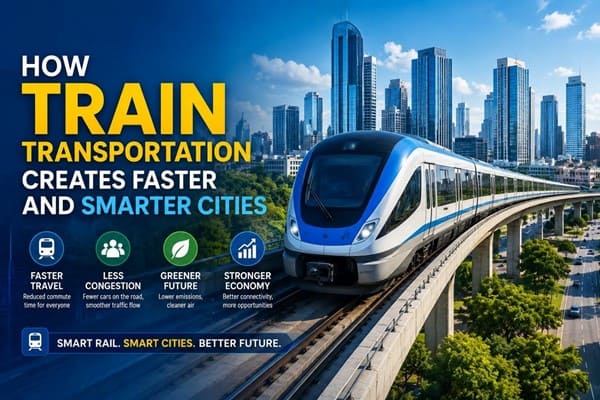 How Train Transportation Creates Faster and Smarter Cities
Railways Board approves Kolkata East-West Metro line-2
Anushka Khare
Posted on: 2019-05-19 09:36:42
Viewer: 2,732
Comments: 0
Country: India
City: Kolkata
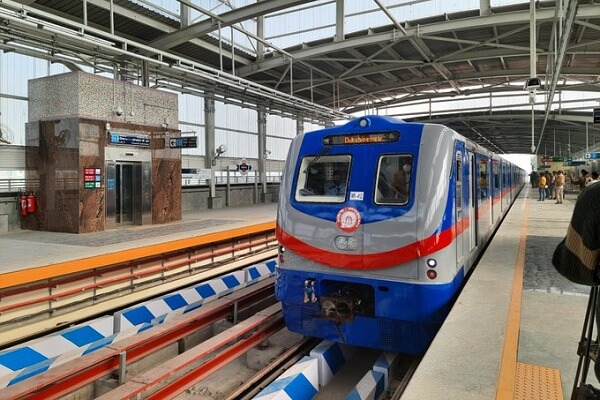
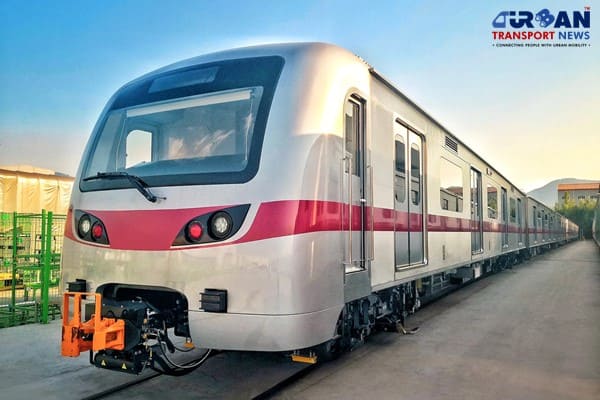
Kolkata (Urban Transport News): It is good news for the metro commuters that Railway Board has given its approval on Friday to commence a commercial run of 5.5 km stretch of Kolkata East-West Metro between Sector V and Salt Lake stadium, by sanctioning the rolling stock to run at a maximum speed of 80 km/h. This information was shared by a senior official of Kolkata Metro Rail Corporation (KMRC).
He said that the Railway Board has accorded its approval with the condition to comply with the Research Design and Standards Organization (RDSO) in its interim speed certification, and suggestions by the commissioner of railway safety (CRS) that will issue the final safety clearance. The KMRC has procured nine train sets from the BEML Limited for commissioning of its first phase.
He further said that we hope to work on this vital infrastructure project will now progress rapidly. This project has the potential to change the way we commute and thousands of citizens would be looking forward to its speedy completion. The Kolkata East-West Metro project has missed several deadlines due to failure in signalling software. The communication-based train control (CBTC) supplier is still carrying the safety trial tests of the rolling stock.
Before commencing the commercial run, the KMRC will have to complete some mandatory testing and commissioning process to ensure that the metro is fully functional and safe for the passengers. After conducting oscillation trials, the KMRC received the safety certificate from the RDSO in January this year.
According to the international standard, the corridor must get an Independent Safety Assessment (ISA) report card from the French “certifier”, a third party appraisal body authorized to double check the necessary safety level of the train system before commencing the safety inspection of CRS.


Anushka Khare
Anushka Khare is a Post Graduate in Journalism from Makhanlal Chaturvedi National University of Journalism and Communication, Bhopal (MP). She covers stories and updates from India.