

Trending Now
 Biofuels in Shipping: A Transitional Solution or Long-Term Strategy?
 8 Reasons Why Trains Are Still One of the Best Ways to Travel
 Interview with Champak Panda, MD-Rolling Stock & Components, Alstom India
 Beyond the Tailpipe: The Case for African Electric Mass Transit
 A Rejected Claim Is Not Always the End, What Car Owners Can Do Next?
 Monsoon Bike Insurance Guide: Covers That Matter before the Rains Begin
 How Train Transportation Creates Faster and Smarter Cities
 PM Modi inaugurates Noida International Airport, Boosting North India’s Multi-Modal connectivity
 Things You Can Do While on Long Train Rides: Stay Productive, Relaxed, and Entertained
 Rail Chamber launches 2026–27 National Membership Drive to strengthen Asia’s Railway Ecosystem
MRT‑7: Manila’s Northern Metro Lifeline on the Horizon
UTN Online Desk
Posted on: 2025-12-10 09:53:00
Viewer: 11,872
Comments: 0
Country: Philippines
City:
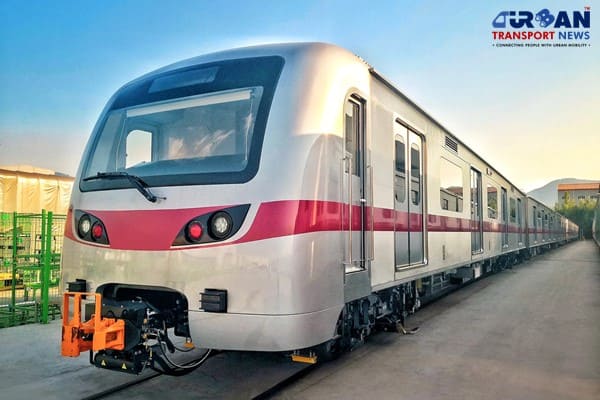
Metro Manila’s mass transit network gets a major upgrade with the Metro Rail Transit Line 7 (MRT‑7).
Spanning 22–23 kilometers, this elevated railway will connect North Avenue in Quezon City to San Jose del Monte in Bulacan, passing through 14 strategically located stations.
Currently, trips from Bulacan to Metro Manila can take 2–3 hours by road, depending on traffic.
Once MRT‑7 becomes operational, that same journey could take as little as 35–40 minutes, with daily ridership projected at 300,000 passengers in the first year and eventually reaching 800,000+ commuters.
This will improve convenience for commuters and decongest Metro Manila’s notoriously heavy traffic.
From LRT‑4 to MRT‑7: The Long Evolution
MRT‑7 has a complex history spanning decades. Initially proposed in the 1990s as a light-rail line called LRT‑4, it was meant to complement the existing LRT‑1, LRT‑2, and MRT‑3 lines.
Over time, planners shifted to a heavy-rail elevated system, leading to a rebranding as MRT‑7.
This explains the seemingly confusing numbering: while Metro Manila has LRT‑1, LRT‑2, and MRT‑3, the designation “7” stems from planning phase codes and project sequencing, not sequential line implementation.
The project gained official approval in principle around 2004, with a public-private partnership (PPP) concession agreement signed in 2008.
Despite this, groundbreaking only occurred in April 2016, with construction formally starting later that year. The project faced multiple hurdles, including
-
Right-of-way conflicts, particularly in Bulacan, where negotiations with landowners delayed construction.
-
Depot and alignment challenges, including technical adjustments to accommodate elevated tracks and integration with other transport infrastructure.
-
Coordination with other transit projects will occur, such as the “common station” at North Avenue, which will link LRT‑1, MRT‑3, and MRT‑7.
Initially, full operations were targeted for 2019, with partial service by 2021, but persistent delays pushed these milestones back.
The project’s evolution reflects the long-term planning challenges of building mass transit in a dense urban and suburban environment.
Technical Details and Route
MRT‑7 is designed as a modern elevated heavy-rail system. Its 14 stations will serve key areas along the route:
-
North Avenue (Quezon City)
-
Batasan
-
Mindanao Avenue
-
Tandang Sora
-
Regalado
-
Fairview
-
Sauyo
-
Talipapa
-
Quirino
-
San Jose Del Monte Central
(NOTE: There are five more stations in this line along intermediate points.)
The line is fully elevated, which minimizes interference with existing road networks and provides a safer, faster ride.
Trains are designed for high-frequency service to accommodate peak-hour passenger loads, and the system will employ modern signaling, safety, and communications technology in line with international standards.
Current Status (2025)
As of mid-2025, MRT‑7 is reported to be approximately 83% complete, according to the Department of Transportation (DOTr). Key milestones include:
-
Construction progress: Elevated tracks, stations, and depot facilities are being built up, though some finishing and systems work remain.
-
Operational preparation: The operator, San Miguel Corporation (SMC), has partnered with South Korea’s Korail to finalize systems testing, safety audits, and pre-operation arrangements.
-
Partial operations: Trial runs and partial service are expected in late 2025 or 2026, while full integration with the common station is targeted for 2027.
Delays in the past have been largely due to land acquisition issues in Bulacan and the technical complexity of linking MRT‑7 with existing lines.
Despite these challenges, the line is now entering its final stages of construction and systems testing, signaling a tangible near-future benefit for commuters.
Why “MRT‑7”?
While LRT‑1, LRT‑2, and MRT‑3 exist, the naming of MRT‑7 may seem counterintuitive. The number “7” originates from planning phase designations rather than a chronological sequence.
During the early 1990s, it was known as LRT‑4, intended as a light-rail line to complement the existing network.
As design standards evolved toward heavy-rail elevated infrastructure, the rebranding to MRT‑7 reflected the line’s new classification and technical specifications.
This numbering system emphasizes the distinction between LRT and MRT, rather than implying a literal numerical order.
MRT‑7, therefore, continues Manila’s evolving transit landscape while preserving the legacy of previous planning phases.
Benefits for Commuters and the Country
MRT‑7 promises significant advantages for Metro Manila and Bulacan commuters:
-
Reduced travel time: Cutting the commute from hours to under 45 minutes allows residents of Bulacan to access Metro Manila more efficiently.
-
Decongested roads: Commonwealth Avenue and EDSA traffic may ease as commuters shift from private vehicles and jeepneys to mass rail transit.
-
Seamless rail integration: The “common station” will allow transfers among LRT‑1, MRT‑3, and MRT‑7, solving long-standing connectivity issues.
-
Economic growth: Improved mobility can boost business opportunities in northern suburbs and support broader regional development.
-
Environmental impact: Encouraging mass transit reduces emissions from road traffic, contributing to cleaner urban air.
For daily commuters, students, workers, and even OFWs visiting family, MRT‑7 represents not just convenience but a quality-of-life upgrade.
People can head from point to point and watch their favorite series or play their favorite peryagame titles on their phones on their journey without having to worry about running late anymore.
Remaining Challenges
While the line is near completion, several hurdles remain:
-
Right-of-way disputes in Bulacan: Any unresolved land issues could still delay final operations.
-
Common station completion: The transfer hub is crucial for integrated service and full commuter benefits.
-
System testing and safety certification: Modern rail standards require thorough checks before public use.
Despite past delays, current reports suggest these challenges are being actively managed, with a realistic outlook for partial operations by 2026 and full operation by 2027.
The Bigger Picture
MRT‑7 is more than just a railway. It’s a step toward modern, integrated mass transit in the Philippines.
By connecting Bulacan with Metro Manila efficiently, it sets a precedent for future north-south expansions, regional rail integration, and public-private collaboration in infrastructure.
For commuters, it represents time saved, stress reduced, and reliable service. For the country, it’s a boost to economic productivity and urban mobility, signaling that mass transit can evolve alongside urban growth.
In short, MRT‑7 is poised to become a lifeline for the northern Metro Manila corridor, reshaping commuting patterns and demonstrating the long-term potential of modern rail systems in the Philippines.
FAQs
Q: What is MRT‑7?
A: MRT‑7 is a 22–23 km elevated metro rail line designed to reduce commute times along Commonwealth Avenue.
Q: How many stations will it have? Where will it span?
A: MRT‑7 will have 14 elevated stations, spanning from North Avenue, Quezon City, to San Jose del Monte, Bulacan.
Q: How many MRTs do we have?
A: There are currently MRT‑3 and MRT‑7. LRT‑1 and LRT‑2 exist under the light rail system.
Q: What’s the difference between an LRT and an MRT?
A: LRT is light rail, usually smaller capacity and lower speed, while MRT is medium/mass/heavy rail, elevated or underground, designed for higher capacity and faster service.
Q: Why is it called MRT‑7?
A: The number “7” comes from planning-phase designations. MRT‑7 evolved from the originally proposed LRT‑4 into a heavy-rail system; numbering reflects project legacy, not sequence.
Q: When will the project be finished?
A: Partial operations are expected in late 2025 or 2026, with full operation and integration via the common station targeted for 2027.

UTN Online Desk
Urban Transport News provides real-time updates for all modes (Railways, Roadways, Waterways & Airways) of the Transportation and Urban Infrastructure Industry.