

Trending Now
 Interview with Champak Panda, MD-Rolling Stock & Components, Alstom India
 Beyond the Tailpipe: The Case for African Electric Mass Transit
 A Rejected Claim Is Not Always the End, What Car Owners Can Do Next?
 Monsoon Bike Insurance Guide: Covers That Matter before the Rains Begin
 How Train Transportation Creates Faster and Smarter Cities
 PM Modi inaugurates Noida International Airport, Boosting North India’s Multi-Modal connectivity
 Things You Can Do While on Long Train Rides: Stay Productive, Relaxed, and Entertained
 Rail Chamber launches 2026–27 National Membership Drive to strengthen Asia’s Railway Ecosystem
 North-South Commuter Railway (NSCR): Modern Train Network Connecting Luzon Island
- India launched Bharat Taxi Service as First Cooperative-Owned Digital Mobility Platform
India to launch 100 New Vande Bharat Trains with Tilting Technology by 2025-26
Vinod Shah
Posted on: 2022-11-30 06:15:00
Viewer: 6,300
Comments: 0
Country: India
City: New Delhi
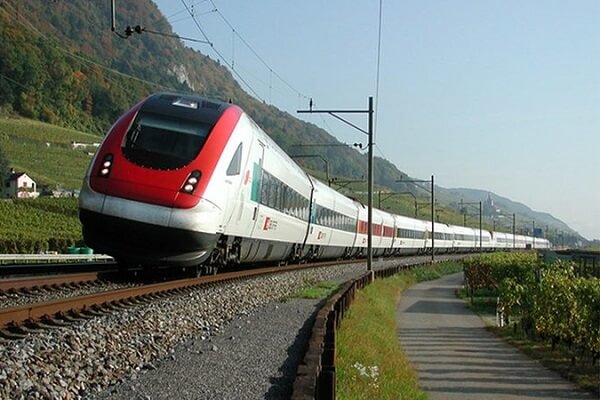
New Delhi, India (Urban Transport News): The national transporter Indian Railways is planning to launch 100 Tilting Trains in the country by the next three years. According to plan, 100 Vande Bharat trains may be the first ones to get the tilting technology by 2025-26. Such trains are now operational in 11 countries - Italy, Portugal, Slovenia, Finland, Russia, Czech Republic, UK, Switzerland, China, Germany and Romania.
"We will have tilting trains in the country. We will tie up with a technology partner for this. We will have this technology in 100 Vande Bharat trains over the next two to three years," said a senior railway officer.
The tilting technology enables trains to maneuver curves at increased speed, that too on regular tracks, just like a motorcycle on a winding road. When a train rounds a curve at speed, objects (and people) inside experience centrifugal force, which pushes them outwards.
There can be various mechanisms to neutralise the tilt force and achieve a balance. It further explains how motion sickness can be essentially eliminated by adjusting the timing of when the cars tilt.
"The Indian Railways has explored various options in the past regarding tilting trains, but has never finalised any detail. It also had discussions with Spanish manufacturer Talgo as well as the Switzerland government," officer added.
Tilting trains are designed to counteract this by tilting the carriages towards the inside of the curve, thus compensating for the g-force.
The first passive tilting car design was built in the US in 1937, and an improved version was built in 1939. Among these was the UAC TurboTrain, which was the first tilting train to enter commercial service in 1968 in the US and Canada. Parallel experiments in Japan and Italy through the 591 Series and the Fiat Y 0160 developed into the highly successful 381 series which began services in 1973 and is in service today, and the Pendolino family currently being used in 11 countries since 1976.


Vinod Shah
Vinod Shah is a Transport Journalist, Urban Planner and Communication Expert. He possesses over 15 years of experience in Editorial, Media and Corporate Communication in the Urban Transport sector.