

Trending Now
 PM Modi inaugurates Noida International Airport, Boosting North India’s Multi-Modal connectivity
 Things You Can Do While on Long Train Rides: Stay Productive, Relaxed, and Entertained
 Rail Chamber launches 2026–27 National Membership Drive to strengthen Asia’s Railway Ecosystem
 North-South Commuter Railway (NSCR): Modern Train Network Connecting Luzon Island
 India launched Bharat Taxi Service as First Cooperative-Owned Digital Mobility Platform
 India places World’s First Live Commercial Order for Hyperloop-Based Cargo Logistics
 How Weigh-in-Motion Systems Are Revolutionizing Freight Safety
 Women Powering India’s Electric Mobility Revolution
 Rail Chamber Launched to Strengthen India’s Global Railway Leadership
 Wage and Hour Enforcement Under the Massachusetts Wage Act and Connecticut Labor Standards
How rail transport can be improved for disabled people?
Maria Rose
Posted on: 2024-01-19 11:49:00
Viewer: 3,333
Comments: 0
Country: United Kingdom
City: London
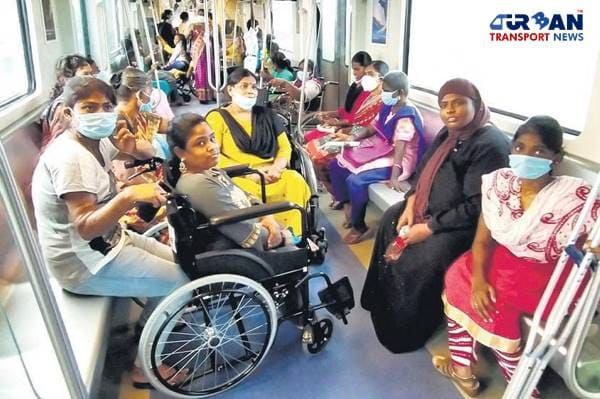
London, United Kingdom (Urban Transport News): In a groundbreaking initiative aimed at enhancing the accessibility of the UK's rail network for disabled individuals, Coventry University is spearheading a research project funded by the Motability Foundation. As part of a distinctive Ph.D. program, Stephanie McPherson-Brown, a dedicated researcher supported by the university's Research Centre for Future Transport and Cities, is delving into the psychological aspects that may contribute to the reluctance of disabled individuals to use trains and proposing solutions to improve their experience.
Understanding the Challenges
Stephanie's research is centered on comprehending why disabled people may feel hesitant about utilizing trains for their transportation needs. The study acknowledges a multitude of potential obstacles, including inadequate station accessibility, traveler anxiety, and concerns about overall train reliability. Stephanie, drawing from her personal experiences, aims to shed light on the challenges faced by disabled individuals in navigating public transportation.
The Department for Transport recently released statistics revealing that 31% of disabled individuals in the UK do not use rail services, with 42% expressing an unwillingness to consider rail travel in the future. These figures underscore the urgency of addressing the existing issues to create a more inclusive and accessible transportation system.
Unveiling Personal Stories
A crucial aspect of Stephanie's research involves conducting interviews with individuals representing a spectrum of disabilities. By capturing personal narratives, she seeks to gain deeper insights into their experiences with rail travel, identifying pain points, and understanding the factors that contribute to their reluctance. This human-centric approach ensures that the research is not just data-driven but also rooted in the lived experiences of those directly affected.
Evaluating Support Systems
Beyond personal interviews, Stephanie is meticulously reviewing the existing support systems available to disabled individuals in the context of rail travel. Her objective is to assess the adequacy of current provisions and offer informed recommendations on how these support structures can be enhanced. This holistic approach aims to address not only physical barriers but also the broader ecosystem of services and assistance available to disabled commuters.
The Vision for Lasting Change
Stephanie McPherson-Brown's commitment to fostering change goes beyond individual experiences. Reflecting on her challenges, she emphasizes the need for a comprehensive understanding of the problems faced by disabled individuals, identifying key areas for improvement, and proposing viable solutions. Her research aims to pave the way for a more inclusive and accommodating rail network, setting a precedent for meaningful change in how disabled people navigate public transportation.
A Program Committed to Empowering Disabled Researchers
This pioneering research project is part of Coventry University's larger initiative to empower disabled individuals in addressing the challenges they encounter while traveling. Professor Paul Herriotts, leading the PhD program, expresses anticipation about the invaluable insights that Stephanie and her fellow researchers will uncover. The ultimate goal is to instigate lasting societal changes that promote accessible transportation for all.
Future Endeavors: Air Travel and Personal Transport
As this transformative research unfolds, the initial group of PhD students is gearing up to explore how air travel and personal transport can be improved for disabled individuals. Coventry University's commitment to advancing accessibility extends beyond rail transport, emphasizing a comprehensive approach to creating an inclusive and accessible transportation landscape.
National Centre for Accessible Transport (NCAT)
In parallel with this research endeavor, Coventry University, in collaboration with partners, has been chosen to establish and manage the UK's first National Centre for Accessible Transport (NCAT). This center, in collaboration with disabled individuals, organizations, transport providers, and policymakers, is dedicated to conducting research and developing accessible travel solutions. The NCAT represents a crucial step towards creating a more universally accessible transportation infrastructure.
A Journey Towards Inclusive Transportation
In conclusion, Coventry University's pioneering research project, funded by the Motability Foundation, is not just a scientific exploration; it's a journey towards creating an inclusive and accessible transportation network for disabled individuals. Stephanie McPherson-Brown's dedication, coupled with the university's broader initiatives, exemplifies a commitment to bringing about tangible and lasting changes in society. As the research progresses, there is optimism that the insights gained will catalyze transforming how we perceive and design transportation for all.


Maria Rose
Maria Rose is an Independent Technology Journalist in London, United Kingdom. She is currently working with Urban Transport News as Special Correspondent in International News Division.