

Trending Now
 Govt of India approves Integrated Transport & Logistics Authority to drive Multimodal Planning
 PCMC approves ₹85 Lakh for DPR of Maharashtra’s First e-RTS Pilot Corridor
 Visakhapatnam partners with Moscow to build Technology-Driven Urban Transport System
 Biofuels in Shipping: A Transitional Solution or Long-Term Strategy?
 8 Reasons Why Trains Are Still One of the Best Ways to Travel
 Interview with Champak Panda, MD-Rolling Stock & Components, Alstom India
 Beyond the Tailpipe: The Case for African Electric Mass Transit
 A Rejected Claim Is Not Always the End, What Car Owners Can Do Next?
 Monsoon Bike Insurance Guide: Covers That Matter before the Rains Begin
 How Train Transportation Creates Faster and Smarter Cities
Govt of India plans 25 new Ropeway Projects across 10 States to boost Hill and Heritage Tourism
Anushka Khare
Posted on: 2025-04-25 09:20:00
Viewer: 22,732
Comments: 0
Country: India
City: New Delhi
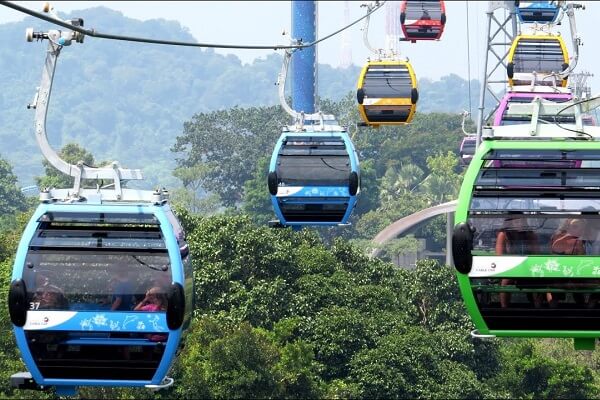
New Delhi, India (Urban Transport News): The Ministry of Road Transport and Highways (MoRTH) has initiated the groundwork for developing at least 25 ropeway projects across 10 states, with the goal of enhancing last-mile connectivity, promoting tourism, and improving accessibility to remote and hilly regions.
Key states under consideration include Tamil Nadu, Kerala, Andhra Pradesh, Karnataka, Rajasthan, and Arunachal Pradesh. Among the prominent sites selected are Ooty (Tamil Nadu), Boyakonda Gangamma Temple (Andhra Pradesh), Mullayyana Giri (Karnataka), Shivneri Fort (Maharashtra), and the Amer-Nahargarh Fort circuit in Jaipur, Rajasthan. Ropeways are also being planned in parts of Himachal Pradesh, Assam, and Arunachal Pradesh.
The National Highways Logistics Management Limited (NHLML), a wholly owned subsidiary of the National Highways Authority of India (NHAI), has been tasked with implementing these ropeway systems under the Parvatmala Pariyojana, announced in the Union Budget 2022.
One of the most ambitious proposals is a 24-km-long ropeway connecting Khanapara to Lokopriya Gopinath Bordoloi International Airport in Guwahati, Assam — one of the longest proposed aerial transport links in the country.
The focus of most ropeway alignments is to ease access to heritage, religious, and high-altitude tourist destinations. Consultants will soon be appointed to prepare Detailed Project Reports (DPRs), which will assess the feasibility, scope, route alignment, and appropriate terminal points for each location. These studies will also determine whether proposed ropeway lengths need to be adjusted based on local geographical and environmental conditions.
Status of Ropeways Projects
Awarded Projects: 4.93 km
- Bijli Mahadev (Himachal Pradesh)
- Dhosi Hill (Haryana)
- Mahakaleshwar Temple (Madhya Pradesh)
Preferred Bidders Identified: 3.25 km
- Sangam Prayagraj (Uttar Pradesh)
- Shankaracharya Temple (Jammu & Kashmir)
Tender Floated for: 53.28 km
- Sonprayag-Kedarnath (Uttarakhand)
- Govindghat - Hemkund Sahib (Uttarakhand)
- Kamakhya Temple (Assam)
- Tawang Monastery - PTTsoLake (Arunachal Pradesh)
- Kathgodam-Hanumangarhi Temple (Uttarakhand)
- Ramtek Gad Temple (Maharashtra)
- Brahmagiri-Anjaneri (Maharashtra)
The ropeway initiative is part of the broader National Ropeways Development Programme, a central government effort to develop sustainable transport in difficult terrain, reduce vehicular congestion, and improve tourism infrastructure in hill states.


Anushka Khare
Anushka Khare is a Post Graduate in Journalism from Makhanlal Chaturvedi National University of Journalism and Communication, Bhopal (MP). She covers stories and updates from India.