

Trending Now
 Govt of India approves Integrated Transport & Logistics Authority to drive Multimodal Planning
 PCMC approves ₹85 Lakh for DPR of Maharashtra’s First e-RTS Pilot Corridor
 Visakhapatnam partners with Moscow to build Technology-Driven Urban Transport System
 Biofuels in Shipping: A Transitional Solution or Long-Term Strategy?
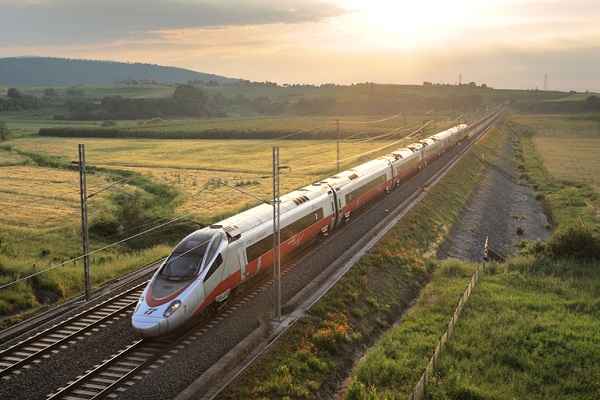 8 Reasons Why Trains Are Still One of the Best Ways to Travel
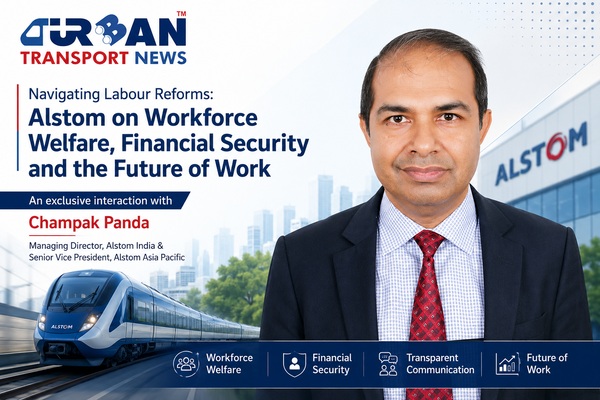 Interview with Champak Panda, MD-Rolling Stock & Components, Alstom India
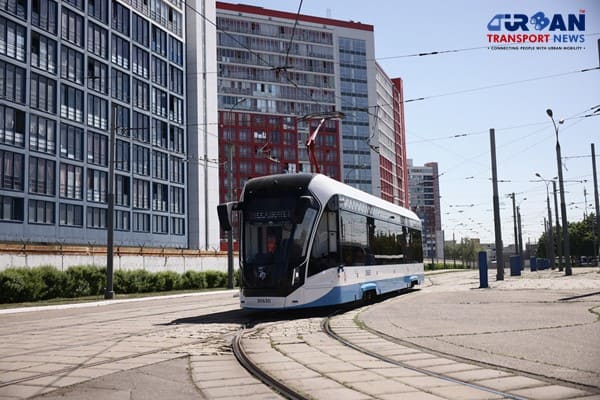 Beyond the Tailpipe: The Case for African Electric Mass Transit
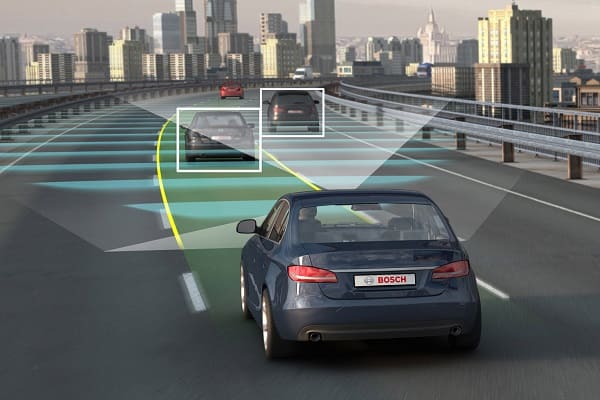 A Rejected Claim Is Not Always the End, What Car Owners Can Do Next?
 Monsoon Bike Insurance Guide: Covers That Matter before the Rains Begin
 How Train Transportation Creates Faster and Smarter Cities
84% women prefers use of public transport in India: World Bank Report
Naomi Pandya
Posted on: 2023-01-04 08:05:00
Viewer: 5,827
Comments: 0
Country: India
City: Mumbai
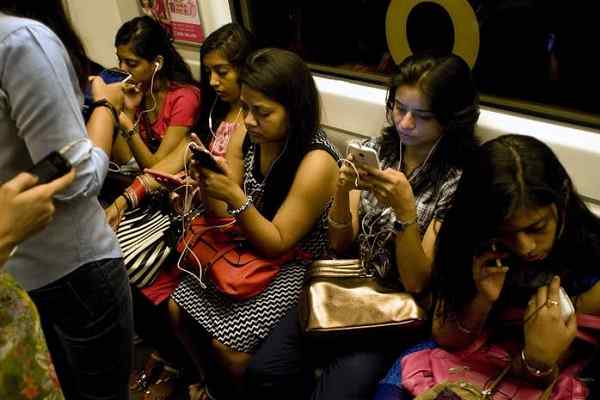
Mumbai, India (Urban Transport News): According to the World Bank Report, Women are amongst the biggest users of public transport in India. 84% of trips taken by women for work were estimated to be by public, intermediate public, and non-motorised transport.
World Bank has recently issued a report titled 'Enabling Gender Responsive Urban Mobility and Public Spaces in India' based on the travelling pattern of men and women travel in India. More women tend to walk to work compared to men. The report said that 45.4% of women go to work by foot versus 27.4% of men.
“As urban mobility systems expand, implementing agencies are feeling the need to address concerns of different genders and ensure safe and inclusive public spaces and public transport for women. The toolkit brings together lessons learnt on the ‘what’ and ‘how’ through a series of 50 case studies from across India and the rest of the world, throwing light on interventions that have worked,” said Gerald Paul Ollivier, Lead Transport Specialist, World Bank, and co-author of the toolkit.
This report has been compiled to guide Indian cities on how to design public transport that is more inclusive of women's travelling requirements.
According to the report, more women also travel by bus and are likely to consider affordability into account when travelling and they often choose slower means of transport since faster modes are more expensive. Lack of safety also deters women from stepping out, reducing their presence in public spaces, the report noted.
The report has been prepared in response to a 2019 World Bank-supported survey of 6,048 respondents in Mumbai. This survey found that between 2004 to 2019, men shifted to two-wheelers to commute to work, while women used auto-rickshaws or taxis, which tend to be more costly (per trip) than two-wheelers.
The report contains practical information that can inform a wide set of policymakers as well as private or community-based organisations to help ensure safe and inclusive public spaces and public transport for women in India.
According to the report, Indian public transport services are not traditionally designed keeping in mind women's safety. Therefore, this has resulted in fewer women going to work. India has amongst the lowest female labour force participation rates globally, at 22.8% in 2019-20.
Further, the report recommended several interventions in public transport and public spaces, including adequate streetlighting, and improved walking and cycling tracks that particularly benefit women who are big users of non-motorised transport (NMT).
The report suggested that devising lower fare policies can boost ridership for women and persons of other genders. A strong grievance redressal system can help fast-track sexual harassment complaints.


Naomi Pandya
Naomi is associated with Urban Transport News since its inception. She is working as a Corporate News Reporter.