

Trending Now
 Interview with Champak Panda, MD-Rolling Stock & Components, Alstom India
 Beyond the Tailpipe: The Case for African Electric Mass Transit
 A Rejected Claim Is Not Always the End, What Car Owners Can Do Next?
 Monsoon Bike Insurance Guide: Covers That Matter before the Rains Begin
 How Train Transportation Creates Faster and Smarter Cities
 PM Modi inaugurates Noida International Airport, Boosting North India’s Multi-Modal connectivity
 Things You Can Do While on Long Train Rides: Stay Productive, Relaxed, and Entertained
 Rail Chamber launches 2026–27 National Membership Drive to strengthen Asia’s Railway Ecosystem
 North-South Commuter Railway (NSCR): Modern Train Network Connecting Luzon Island
- India launched Bharat Taxi Service as First Cooperative-Owned Digital Mobility Platform
NCRTC to develop 9 RapidX stations as Multi-Modal Transit Hub on Delhi-Meerut RRTS Line
Anushka Khare
Posted on: 2023-05-22 07:15:00
Viewer: 4,119
Comments: 0
Country: India
City: New Delhi
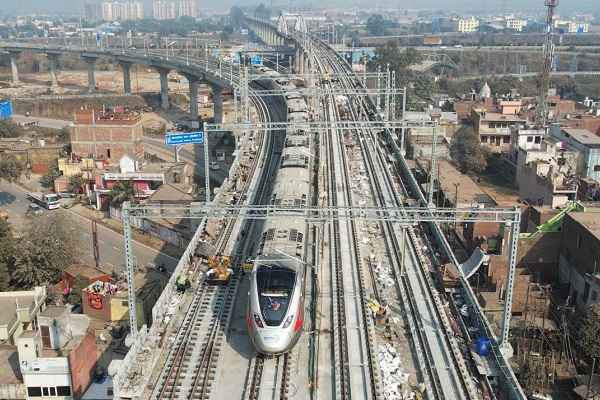
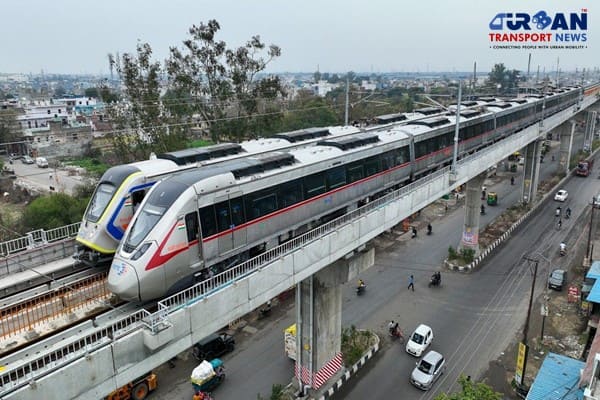
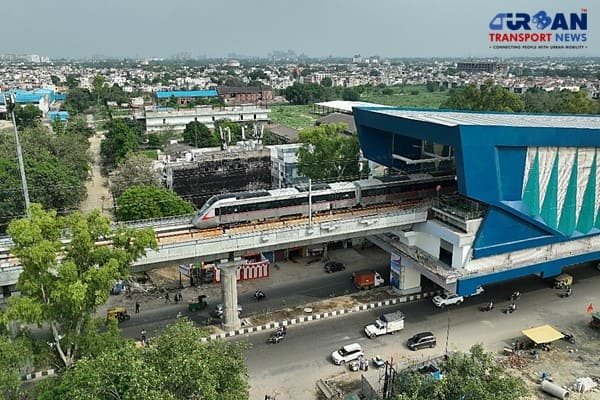
New Delhi, India (Urban Transport News): The National Capital Region Transport Corporation Ltd (NCRTC) has revealed a plan to include provisions for multi-modal integration at a total of nine stations across the cities of Delhi, Ghaziabad, and Meerut on Delhi-Meerut Regional Rapid Transit System (RRTS) Corridor.
The estimated cost of the Delhi-Meerut RRTS project is around Rs 30,274 crore, with an expected daily ridership of 800,000 passengers across 25 stations, 22 of which fall within the jurisdiction of the state of Uttar Pradesh and three in Delhi.
The aim of multi-modal integration is to make travel hassle-free and convenient for passengers, promoting the use of public transport and enabling seamless journeys in the National Capital Region (NCR).
Of the current nine RRTS stations offering multi-modal integration, three are located in Delhi, four in Ghaziabad, and two in Meerut.
Four stations—Sarai Kale Khan, New Ashok Nagar, Anand Vihar, and Ghaziabad city—will allow RRTS passengers to interchange with metro trains. Additionally, if plans materialize, the Sahibabad station in Ghaziabad may also provide this facility if authorities decide to bring the Sector 62 to Sahibabad metro line to Ghaziabad.
NCRTC Officials said that nine stations will offer multi-modal integration for RapidX passengers, facilitating connections with other transport systems such as the metro, ISBTs, UP roadways buses, and more.
“The stations have been designed with a focus on seamless integration with other transport systems. The three major stations among the nine are Sarai Kale Khan, Anand Vihar in Delhi, and Ghaziabad city. This multi-modal integration enables passengers to access various modes of transportation without inconvenience,” said Puneet Vats, Chief Public Relations Officer (CPRO), NCRTC.
According to NCRTC officials, the RRTS project will significantly reduce CO2 emissions by removing approximately 150,000 private vehicles from the roads. The entire 82km corridor is expected to reduce about 2.5 lakh carbon emissions per year, thus helping to mitigate the impact of air pollution.
“The RRTS stations are being seamlessly integrated with other modes of public transport, such as bus stands, airports, metro stations, and railway stations, wherever feasible along all three priority corridors of Phase I: Delhi-Ghaziabad-Meerut, Delhi-Panipat, and Delhi-SNB-Alwar. The design allows commuters to switch between modes of transport without exiting the station. Lifts, escalators, and foot over bridges are being provided to facilitate this,” said an officer from NCRTC, HT reported.
To accommodate more passengers, the RRTS stations will also be connected to last-mile connectivity options, including buses, autos, e-rickshaws, and others, ensuring easy access to their destinations.


Anushka Khare
Anushka Khare is a Post Graduate in Journalism from Makhanlal Chaturvedi National University of Journalism and Communication, Bhopal (MP). She covers stories and updates from India.