

Trending Now
 Biofuels in Shipping: A Transitional Solution or Long-Term Strategy?
 8 Reasons Why Trains Are Still One of the Best Ways to Travel
 Interview with Champak Panda, MD-Rolling Stock & Components, Alstom India
 Beyond the Tailpipe: The Case for African Electric Mass Transit
 A Rejected Claim Is Not Always the End, What Car Owners Can Do Next?
 Monsoon Bike Insurance Guide: Covers That Matter before the Rains Begin
 How Train Transportation Creates Faster and Smarter Cities
 PM Modi inaugurates Noida International Airport, Boosting North India’s Multi-Modal connectivity
 Things You Can Do While on Long Train Rides: Stay Productive, Relaxed, and Entertained
 Rail Chamber launches 2026–27 National Membership Drive to strengthen Asia’s Railway Ecosystem
Pioneering the Green Rails: The Rise of Hydrogen-Powered Mobility
Vinod Shah
Posted on: 2024-02-23 06:15:00
Viewer: 6,097
Comments: 0
Country: India
City: New Delhi
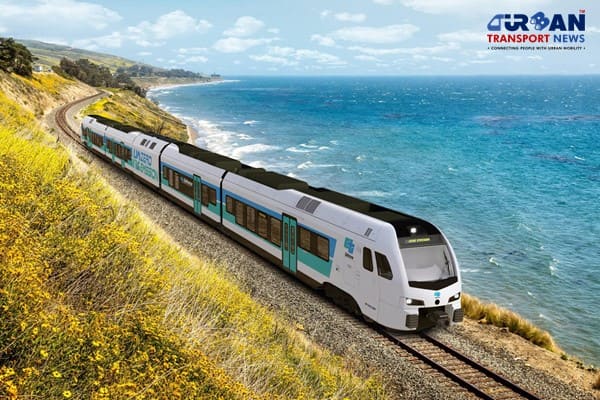
In a bold leap towards sustainable transportation, hydrogen-powered mobility is reshaping the landscape of the railway industry. Alstom's Coradia iLint, the world's first hydrogen-powered passenger train, marked a historic milestone with its commercial debut in Germany in 2018. Fueled by a hydrogen fuel cell, this cutting-edge train generates electrical power for traction, emitting only water vapor—a testament to its significant environmental benefit.
The Hydrogen Revolution Unveiled
The widespread adoption of hydrogen-powered mobility necessitates the development of robust local hydrogen production and distribution infrastructures. This shift not only propels the transportation sector towards eco-friendliness but also opens new frontiers for innovation and collaboration.
Alstom's Coradia iLint
Alstom's Coradia iLint, dubbed the premier hydrogen-powered passenger train globally, symbolizes a paradigm shift in rail transportation. Beyond its operational prowess, this hydrogen-driven marvel contributes to environmental sustainability by emitting only water vapor—a stark contrast to traditional diesel-powered trains.
Siemens Mobility and the "H2goes Rail" Initiative
In collaboration with Deutsche Bahn, Siemens Mobility has played a pivotal role in advancing hydrogen-powered trains. The "H2goes Rail" initiative witnessed the development of the Mireo Plus H, the next generation of hydrogen trains. This groundbreaking project coincided with Deutsche Bahn's establishment of a novel hydrogen refueling station, further solidifying the commitment to a green future in rail transport.
Stadler's FLIRT H₂ Model
Stadler introduces the FLIRT H₂ model, a hydrogen-powered solution designed for routes where diesel trains persist. This innovative model employs an electric drive with hydrogen fuel cells as its energy source, enabling emission-free passenger transport on non-electrified or partially electrified lines. Stadler's FLIRT H₂ represents a significant step towards reducing the carbon footprint in railway operations.
FCH2Rail Project: Driving Innovation on Spanish Rails
The FCH2Rail project, a collaborative effort involving CAF, DLR, Toyota, Renfe, Adif, CNH2, IP, and Stemmann-Technik, has achieved a notable milestone. Securing authorization for testing on the Spanish National Railway Network, this project aims to develop a bi-mode demonstrator train with hydrogen fuel cells. With a budget of 14 million euros, FCH2Rail is propelling Spain towards a sustainable and efficient railway system.
CRRC's Autonomous Rail Rapid Transit (ART) in Malaysia
CRRC's hydrogen-powered Autonomous Rail Rapid Transit (ART) has officially debuted in Malaysia, presenting a hybrid solution that combines the advantages of both rail and ground transit. This marks a significant step in expanding the reach of hydrogen-powered mobility beyond traditional rail lines, showcasing the adaptability and versatility of this innovative technology.
Deutsche Bahn and Fortescue Future Industries Collaboration
Deutsche Bahn (DB) and Fortescue Future Industries (FFI) are set to collaborate on retrofitting existing diesel engines to operate on hydrogen and ammonia fuel. This initiative focuses on locomotives and other traction vehicles, representing a concerted effort to transition existing rail infrastructure towards greener alternatives.
Charting a Sustainable Future on Rails
As hydrogen-powered mobility gains momentum, the railway industry is embracing a transformative era of sustainability. From the pioneering efforts of Alstom's Coradia iLint to collaborative projects like FCH2Rail, the hydrogen revolution is not just a technological leap but a commitment to a greener and more efficient future in rail transportation.


Vinod Shah
Vinod Shah is a Transport Journalist, Urban Planner and Communication Expert. He possesses over 15 years of experience in Editorial, Media and Corporate Communication in the Urban Transport sector.